Ever wondered what ‘force meaning’ really stands for? It’s more than just physics or legal jargon—it shapes how we understand power, action, and influence across fields. Let’s break it down with clarity and depth.
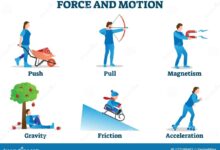
Force Meaning: A Foundational Understanding

The term force meaning spans disciplines, from science to philosophy, law to everyday language. At its core, ‘force’ implies a push or pull that causes change. But the meaning behind it evolves depending on context. Whether it’s Newton’s laws or emotional pressure in human relationships, force is a catalyst for transformation.
Defining Force in General Terms
In simple language, force is any interaction that changes the motion of an object. According to Encyclopedia Britannica, force is an influence that can cause an object with mass to change its velocity. This definition, while rooted in physics, has metaphorical extensions in psychology, politics, and ethics.
- Force can be physical, like gravity or friction.
- It can also be abstract, such as social pressure or legal compulsion.
- The perception of force often depends on cultural and contextual factors.
Etymology and Linguistic Roots
The word ‘force’ comes from the Latin fortis, meaning ‘strong’. Over time, it evolved through Old French force into Middle English. This linguistic journey reflects a deep-seated association with strength, power, and capability. Understanding the etymology helps clarify why ‘force meaning’ often carries connotations of dominance or necessity.
“Force has always been the midwife of every old society which is pregnant with a new one.” — Karl Marx
Force Meaning in Physics: The Scientific Perspective
When most people hear ‘force’, they think of physics. In this domain, force meaning is precise and quantifiable. It’s not just about strength—it’s about measurable interactions governed by laws.
Newton’s Laws of Motion and Force
Sir Isaac Newton laid the foundation for classical mechanics with his three laws of motion. The second law, F = ma (Force equals mass times acceleration), is central to understanding force meaning in science.
- Newton’s First Law: An object remains at rest or in uniform motion unless acted upon by a force.
- Newton’s Second Law: The acceleration of an object is directly proportional to the net force acting on it.
- Newton’s Third Law: For every action, there is an equal and opposite reaction.
These laws show that force isn’t just about movement—it’s about change in movement. Without force, there is no acceleration, no change in direction, no transformation of state.
Types of Forces in Nature
Physics identifies four fundamental forces that govern all interactions in the universe:
- Gravitational Force: The attraction between masses. It keeps planets in orbit and apples falling from trees.
- Electromagnetic Force: Governs interactions between charged particles. It’s responsible for light, electricity, and magnetism.
- Strong Nuclear Force: Holds atomic nuclei together. Without it, atoms wouldn’t exist.
- Weak Nuclear Force: Responsible for radioactive decay and nuclear fission.
According to Nobel Prize’s official site, these forces shape everything from subatomic particles to galaxies. The force meaning here is literal, measurable, and universal.
Force Meaning in Law and Ethics
Outside science, force meaning takes on moral and legal dimensions. In law, force often refers to physical coercion or the legitimate use of power by authorities.
Use of Force in Legal Contexts
In criminal law, ‘use of force’ is a critical concept. It determines whether an action like self-defense is justified. For example, police officers are trained in graduated levels of force, from verbal commands to lethal intervention.
- Non-deadly force: Used to restrain or control, such as handcuffs or pepper spray.
- Deadly force: Only permissible when there’s an imminent threat to life.
- Civil lawsuits often hinge on whether the force used was ‘reasonable’ under the circumstances.
The U.S. Department of Justice outlines guidelines on principles of force usage, emphasizing proportionality and necessity.
Moral and Ethical Implications of Force
Philosophers have long debated the ethics of force. Is it ever justified to impose will on others? Thinkers like John Locke argued that government’s use of force must be consensual and limited. In contrast, Machiavelli saw force as a necessary tool for maintaining order.
“All government, indeed every human benefit and enjoyment, every virtue and every prudent act, is founded on compromise and, I will even say, on barter. But the use of force is not compromise.” — Daniel Webster
The ethical force meaning often revolves around consent, harm, and justice. When force replaces dialogue, societies risk authoritarianism.
Force Meaning in Psychology and Human Behavior
Psychologically, force isn’t always physical. It can manifest as emotional pressure, manipulation, or internal drive. The force meaning here shifts from external action to internal motivation.
Internal vs. External Forces in Decision-Making
People make choices under various forces. External forces include societal expectations, peer pressure, or economic constraints. Internal forces are desires, fears, or moral convictions.
- External force example: A student studies hard because parents demand top grades.
- Internal force example: An artist creates because of an irrepressible need for expression.
- When internal and external forces conflict, cognitive dissonance can occur.
Psychologist Kurt Lewin’s Force Field Analysis model explains how change happens when driving forces overcome restraining ones.
Coercion and Psychological Manipulation
Not all force is visible. Coercion, gaslighting, and emotional blackmail are forms of psychological force. They undermine autonomy and can cause long-term trauma.
- Coercive control is now recognized as a form of domestic abuse in many countries.
- Workplace bullying uses subtle force to dominate others.
- Advertising often uses persuasive force to shape consumer behavior.
The force meaning in psychology highlights power dynamics in relationships. As the American Psychological Association notes, understanding these dynamics is key to promoting mental health and equity.
Force Meaning in Social and Political Movements
Societies evolve through force—both violent and nonviolent. The force meaning in politics often determines the legitimacy of revolutions, protests, and governance.
Revolutionary Force and Civil Disobedience
History is shaped by those who wield force to challenge injustice. From the American Revolution to Gandhi’s Salt March, force has taken many forms.
- Violent revolutions use armed struggle to overthrow regimes.
- Nonviolent resistance, as practiced by Martin Luther King Jr., uses moral force to demand change.
- The success of a movement often depends on whether its use of force is seen as justified by the public.
Gene Sharp’s research on 198 methods of nonviolent action shows that force doesn’t require weapons to be effective.
State Power and Military Force
Nations maintain armies to project force. This can be for defense, deterrence, or imperialism. The force meaning in geopolitics is often tied to national interest and global influence.
- Deterrence theory relies on the threat of force to prevent war.
- Humanitarian interventions use military force to protect civilians.
- Critics argue that military force often escalates conflicts rather than resolving them.
The United Nations Charter restricts the use of force between states, except in self-defense or with Security Council approval.
Force Meaning in Everyday Language and Metaphor
Beyond technical fields, force meaning appears in idioms, expressions, and casual speech. These uses reveal how deeply embedded the concept is in human thought.
Common Phrases and Idioms Involving Force
We use ‘force’ metaphorically all the time:
- “She forced a smile” – implies emotional suppression.
- “A force of nature” – describes someone unstoppable or highly energetic.
- “Force-fed information” – suggests unwanted or excessive input.
- “Brute force” – often refers to solving problems through sheer effort, not intelligence.
These expressions show that force meaning isn’t just about physics—it’s about human experience.
Force as a Symbol of Determination
In motivational contexts, ‘force’ symbolizes willpower and resilience. Phrases like “inner force” or “driving force” describe the energy behind success.
- Ambition can be a positive force in personal development.
- Leaders are often described as ‘forces of change’.
- Self-discipline is sometimes called ‘moral force’.
This symbolic use elevates force meaning from mere action to a quality of character.
Force Meaning Across Cultures and Philosophies
Different cultures interpret force differently. Some revere it as strength; others warn against its misuse. The force meaning in philosophy often reflects deeper worldviews.
Eastern Philosophies on Force and Harmony
In Taoism, the ideal is wu wei—effortless action. Force is seen as disruptive to natural flow. The Tao Te Ching says: “The softest things in the world overcome the hardest things.”
- Confucianism values moral force over physical power.
- Buddhism teaches non-violence (ahimsa) and inner peace as superior to external force.
- Japanese martial arts like Aikido use an opponent’s force against them, rather than meeting force with force.
These traditions suggest that true strength lies in restraint and harmony.
Western Views on Power and Force
Western philosophy often embraces force as a tool for progress. From Machiavelli to Nietzsche, power is seen as essential to human achievement.
- Enlightenment thinkers believed in the force of reason to overcome ignorance.
- Nietzsche’s ‘will to power’ describes force as a fundamental drive in life.
- Modern capitalism celebrates the ‘force’ of innovation and competition.
Yet, critics like Erich Fromm warn that unchecked force leads to alienation and destruction.
Force Meaning in Technology and Innovation
In the digital age, force takes new forms. Algorithms, automation, and artificial intelligence exert invisible forces on behavior and decision-making.
Algorithmic Force and Digital Influence
Social media platforms use algorithms that ‘push’ content, shaping what users see and think. This is a form of soft force—guiding attention without direct coercion.
- Recommendation engines ‘force’ users into echo chambers.
- Online advertising uses behavioral data to apply psychological force.
- Deepfakes and misinformation spread with the force of viral content.
As Wired Magazine reports, algorithmic force is becoming one of the most powerful influences in modern life.
Automation and the Force of Efficiency
Machines replace human labor not through violence, but through efficiency. The force of automation reshapes economies and job markets.
- Robots in manufacturing apply physical force with precision.
- AI systems make decisions with speed and scale that humans can’t match.
- The ‘force’ of innovation often outpaces regulation and ethics.
This technological force demands new frameworks for accountability and fairness.
What is the basic force meaning in physics?
In physics, force meaning refers to any interaction that changes the motion of an object. It is measured in Newtons and described by Newton’s laws of motion. The formula F = ma (force equals mass times acceleration) is fundamental to understanding how forces act on objects.
How is force meaning applied in law?
In legal terms, force meaning often relates to the use of physical coercion or violence. Laws define when force is justified, such as in self-defense or by law enforcement. The concept of ‘reasonable force’ is central to many legal systems.
Can force be non-physical?
Yes, force can be non-physical. Psychological, social, and emotional forces influence behavior without physical contact. Examples include peer pressure, propaganda, or internal motivation. These forms of force are powerful despite lacking a tangible push or pull.
What is the difference between force and power?
Force is a push or pull that causes change in motion, while power is the rate at which work is done. In broader terms, power refers to the ability to influence or control, whereas force is the mechanism through which that power may be exerted.
Is force always negative?
No, force is not always negative. While it can be destructive, force is also necessary for progress, protection, and change. Positive uses include self-defense, social reform, and personal determination. The morality of force depends on intent, context, and outcome.
Understanding force meaning is essential across science, law, psychology, and culture. It’s not just a physics term—it’s a lens through which we interpret action, power, and change. From Newton’s equations to Gandhi’s marches, force shapes our world in visible and invisible ways. Recognizing its many forms helps us use it wisely, resist its abuse, and harness its potential for good. Whether physical, emotional, or systemic, force is a fundamental part of the human experience.
Further Reading:
