Ever wondered why you don’t fall through the floor? It’s all thanks to the force normal — a silent but mighty player in everyday physics that keeps objects from sinking into surfaces. Let’s dive into its secrets.
What Is Force Normal? A Simple Yet Powerful Definition

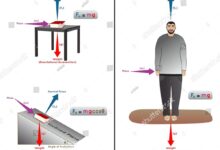
The term force normal might sound complex, but it’s actually one of the most intuitive forces in classical mechanics. It’s the force exerted by a surface to support the weight of an object resting on it, acting perpendicularly (or ‘normally’) to the surface. This force prevents objects from passing through tables, floors, or any solid structure.
Understanding the Word ‘Normal’ in Physics
In everyday language, ‘normal’ means usual or typical. But in physics, ‘normal’ refers to perpendicular. So when we say force normal, we mean the force that acts at a 90-degree angle to the contact surface. This distinction is crucial for accurate understanding.
- The word ‘normal’ comes from the Latin norma, meaning a carpenter’s square — a tool used to create right angles.
- Thus, in vector mathematics and physics, ‘normal’ always implies orthogonality.
- This perpendicular nature ensures that the force normal does no work when an object moves parallel to the surface.
How Force Normal Balances Gravity
When an object sits on a flat horizontal surface, the force normal is equal in magnitude but opposite in direction to the gravitational force (weight). This balance results in zero net vertical force, meaning the object remains at rest — a perfect example of Newton’s First Law.
“The normal force is a reactionary force — it adjusts itself based on the situation to prevent penetration of surfaces.” — Dr. Walter Lewin, MIT Physics Lectures
For instance, if a book weighing 10 N rests on a table, the table pushes back with a force normal of 10 N upward. No motion occurs because forces are balanced.
Force Normal on Inclined Planes: Breaking Down the Components
When a surface isn’t flat, like a ramp or hill, the direction and magnitude of the force normal change. On an inclined plane, gravity pulls straight down, but the surface can only push perpendicularly to itself. This leads to a reduction in the normal force compared to the object’s full weight.
Resolving Forces on a Slope
To analyze motion on an incline, physicists break the gravitational force into two components:
- Parallel component: Acts along the slope, causing acceleration downward.
- Perpendicular component: Acts into the surface, counteracted by the force normal.
The perpendicular component is calculated as mg cos(θ), where θ is the angle of inclination. Therefore, the force normal equals mg cos(θ), which is always less than mg when θ > 0°.
Real-World Example: Skiing Down a Hill
Imagine a skier on a snowy slope. As the incline increases, the force normal decreases. This has practical implications:
- Less normal force means less friction (since friction depends on normal force), making steeper slopes more slippery.
- Airtime during jumps occurs when the normal force drops to zero — the skier is no longer in contact with the ground.
- Designers of ski resorts use these principles to control speed and safety on runs.
Understanding how force normal varies with angle helps engineers design safer roads, roller coasters, and athletic tracks.
The Role of Force Normal in Everyday Life
You interact with the force normal every second, even if you don’t realize it. From walking to sitting, this force is essential for stability and movement. It’s not just a textbook concept — it’s a real, measurable force shaping daily experiences.
Walking and Standing: How Force Normal Supports You
When you stand on the ground, your body weight pulls you down due to gravity. The Earth pushes back with an equal and opposite force normal. This interaction allows you to remain stationary without sinking.
- Pressure sensors in shoes measure variations in normal force during gait analysis.
- Athletes use force plates to study how normal force changes during sprinting or jumping.
- Prosthetic limb designers optimize materials to mimic natural force distribution.
Furniture and Architecture: Hidden Engineering
Chairs, beds, and floors are all designed with the force normal in mind. Engineers calculate maximum expected loads to ensure structures can provide sufficient normal force without failing.
- A typical office chair must support up to 300 lbs, requiring materials that resist compression.
- Building codes specify load-bearing capacities based on anticipated normal forces from occupants and furniture.
- Earthquake-resistant buildings account for dynamic normal forces during seismic shifts.
Without proper consideration of force normal, structures could collapse under stress.
Force Normal vs. Other Contact Forces
While force normal is a contact force, it’s important to distinguish it from others like friction, tension, and air resistance. Each plays a unique role, but they often interact in complex systems.
Differences Between Normal Force and Friction
Friction and force normal are closely related but fundamentally different:
- Direction: Friction acts parallel to the surface; force normal acts perpendicular.
- Dependency: Kinetic and static friction are directly proportional to the force normal via the coefficient of friction (μ).
- Function: Friction resists motion; force normal prevents penetration.
For example, on icy roads, reduced friction makes driving dangerous — even though the force normal remains unchanged.
Interaction With Tension and Applied Forces
In systems involving ropes, pulleys, or pushes, the force normal can increase or decrease depending on external forces.
- If you push down on a box on the floor, the normal force increases to balance both weight and your applied force.
- If you pull upward on the box (but not enough to lift it), the normal force decreases.
- In elevators, apparent weight changes due to acceleration, altering the normal force measured by a scale.
These scenarios show that force normal is not constant — it’s a responsive force that adapts to conditions.
Measuring Force Normal: Tools and Techniques
Scientists and engineers use various instruments to measure the force normal in both lab and real-world settings. Accurate measurement is vital for safety, design, and research.
Force Plates and Load Cells
Force plates are platforms embedded with sensors that measure ground reaction forces, including the vertical component (which is the force normal).
- Used in biomechanics labs to study human movement.
- Help diagnose gait abnormalities in patients with injuries.
- Essential in sports science for optimizing athletic performance.
Load cells, often used in industrial scales, operate on similar principles, converting mechanical force into electrical signals.
Data Analysis and Visualization
Modern software allows real-time visualization of force normal data. For example:
- Graphs showing how normal force fluctuates during a jump.
- Heat maps indicating pressure distribution under a foot.
- Integration with motion capture systems for comprehensive analysis.
These tools help researchers understand how forces interact dynamically. You can explore more about force measurement techniques at NIST, the National Institute of Standards and Technology.
Common Misconceptions About Force Normal
Despite its simplicity, the force normal is often misunderstood. Clarifying these misconceptions improves both conceptual understanding and practical application.
Misconception 1: Normal Force Always Equals Weight
This is only true on horizontal surfaces with no vertical acceleration. In other cases:
- In an accelerating elevator, normal force differs from weight.
- On inclines, normal force is less than weight.
- When external forces are applied vertically, normal force adjusts accordingly.
For example, if an elevator accelerates upward, the normal force exceeds the person’s weight, creating a sensation of heaviness.
Misconception 2: Normal Force Is a Fundamental Force
The force normal is not a fundamental force like gravity or electromagnetism. Instead, it’s a macroscopic manifestation of electromagnetic repulsion between atoms in the object and the surface.
- At the atomic level, electrons in the object repel electrons in the surface.
- This repulsion prevents interpenetration of matter.
- Thus, force normal is a constraint force — it arises due to physical constraints.
Understanding this helps bridge classical mechanics with quantum physics.
Advanced Applications of Force Normal in Science and Engineering
Beyond basic physics, the concept of force normal plays a critical role in advanced fields such as robotics, aerospace, and material science.
Robotics and Balance Control
Robots like Boston Dynamics’ Atlas use force normal feedback to maintain balance. Sensors in their feet detect normal forces and adjust posture in real time.
- Zero Moment Point (ZMP) control relies on normal force distribution to prevent tipping.
- Walking robots must manage shifting normal forces with each step.
- Machine learning models predict optimal force distribution for stability.
These systems mimic human balance mechanisms, showing how deeply rooted force normal is in locomotion.
Aerospace and Microgravity Simulations
In space missions, understanding normal force is crucial for designing landing gear and surface rovers.
- Mars rovers must handle reduced gravity, affecting normal force and traction.
- Lunar landers use sensors to detect contact force upon touchdown.
- Parabolic flights simulate microgravity, where normal force approaches zero.
Engineers at NASA use force normal models to ensure safe landings on extraterrestrial surfaces.
Material Stress Testing and Design
In civil and mechanical engineering, materials are tested under various normal forces to determine compressive strength.
- Concrete pillars are compressed until failure to measure load capacity.
- Orthopedic implants are tested under simulated body forces.
- Finite element analysis (FEA) software simulates normal force distribution in complex geometries.
These tests ensure safety and longevity in construction and medical devices.
Force Normal in Newton’s Laws: A Foundational Perspective
The force normal is deeply embedded in Newtonian mechanics. It appears in all three laws, serving as a key example of how forces interact in physical systems.
Newton’s First Law: Equilibrium and Net Force
An object at rest stays at rest unless acted upon by a net external force. When a book lies on a table, gravity pulls down and force normal pushes up. Since they cancel, net force is zero — satisfying Newton’s First Law.
- This state is called translational equilibrium.
- No acceleration occurs in the vertical direction.
- The normal force is essential for maintaining this balance.
Newton’s Third Law: Action and Reaction Pairs
For every action, there is an equal and opposite reaction. When an object exerts a force on a surface (its weight), the surface exerts an equal and opposite force normal back.
- These two forces form an action-reaction pair.
- They act on different objects: weight acts on the surface, normal force acts on the object.
- They are always equal in magnitude and opposite in direction.
This law explains why you feel pressure on your feet — the ground is literally pushing back!
Newton’s Second Law: Acceleration and Net Force
When forces are unbalanced, acceleration occurs. In vertical motion (like elevators), the difference between weight and force normal determines acceleration.
- If normal force > weight, acceleration is upward.
- If normal force < weight, acceleration is downward.
- If normal force = weight, acceleration is zero (constant velocity or rest).
This principle is used in elevator design and amusement park rides to create thrilling sensations safely.
Force Normal in Non-Traditional Scenarios
The concept of force normal extends beyond solid surfaces. It applies in fluids, magnetic levitation, and even theoretical physics.
Fluids and Buoyancy: A Different Kind of Normal Force?
While buoyant force isn’t technically a normal force (since it arises from pressure differences), it serves a similar role — supporting objects against gravity.
- Archimedes’ principle states that buoyant force equals the weight of displaced fluid.
- Like normal force, it opposes gravity and prevents sinking.
- However, it acts over the entire submerged surface, not just at a point.
This analogy helps students transition from solid to fluid mechanics.
Magnetic Levitation and Contactless Support
In maglev trains, objects float without touching a surface. Yet, there’s still a force counteracting gravity — provided by magnetic fields.
- Though no physical contact occurs, the magnetic force performs the same function as force normal.
- Stability requires active control systems to maintain equilibrium.
- This shows that the concept of ‘support force’ transcends physical contact.
Thus, while not a traditional normal force, the principle remains — something must oppose gravity.
Virtual Forces in Accelerated Frames
In non-inertial reference frames (like a turning car), fictitious forces like centrifugal force appear. The normal force adjusts to balance these in certain cases.
- In a banked turn, the normal force has a horizontal component that provides centripetal force.
- Riders feel ‘pushed’ outward, but it’s the seat’s normal force that keeps them moving in a circle.
- This interplay is crucial in roller coaster design.
These examples show how force normal adapts in complex, dynamic environments.
What is force normal?
Force normal is the perpendicular force exerted by a surface on an object in contact with it. It prevents the object from passing through the surface and adjusts based on external forces and motion.
Does force normal always equal weight?
No. Force normal equals weight only when an object is on a horizontal surface with no vertical acceleration. It changes with inclines, applied forces, and acceleration (e.g., in elevators).
Can force normal be zero?
Yes. Force normal becomes zero when an object loses contact with a surface, such as during free fall or when jumping. At that moment, only gravity acts on the object.
Is force normal a fundamental force?
No. Force normal is not a fundamental force. It arises from electromagnetic interactions between atoms and is classified as a constraint or contact force.
How is force normal measured?
It is measured using tools like force plates, load cells, or pressure sensors. These devices detect the reaction force from a surface and convert it into readable data.
The force normal is far more than a textbook definition — it’s a dynamic, responsive force essential to physics, engineering, and daily life. From keeping your coffee cup on the table to enabling robots to walk, its applications are vast and vital. By understanding its behavior across different scenarios — flat surfaces, inclines, accelerating systems, and even space — we gain deeper insight into how forces shape our world. Whether you’re a student, engineer, or curious mind, appreciating the power of force normal opens doors to mastering mechanics and beyond.
Further Reading:
