Have you ever wondered why things fall down and not up? The force of gravity is more than just a reason apples drop from trees—it’s a fundamental power shaping the universe, from galaxies to atoms. Let’s dive into the invisible force that keeps us grounded.
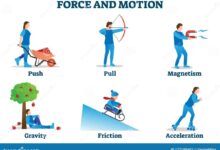
Force of Gravity: The Universal Architect

The force of gravity is one of the four fundamental forces in nature, alongside electromagnetism, the strong nuclear force, and the weak nuclear force. Unlike the others, gravity is the weakest—but its influence spans the largest scales. It governs the motion of planets, stars, galaxies, and even the expansion of the universe itself.
What Exactly Is the Force of Gravity?
Gravity is a natural phenomenon by which all objects with mass or energy are attracted to one another. Isaac Newton first described it mathematically in 1687 with his law of universal gravitation. According to Newton, every particle in the universe attracts every other particle with a force proportional to the product of their masses and inversely proportional to the square of the distance between them.
This relationship is captured in the famous equation:
F = G × (m₁m₂ / r²)
Where:
F = gravitational force,
G = gravitational constant (6.67430 × 10⁻¹¹ m³ kg⁻¹ s⁻²),
m₁ and m₂ = masses of the two objects,
r = distance between their centers.
This formula works perfectly for most earthly and planetary calculations, from falling apples to orbiting satellites.
How Gravity Differs from Other Forces
- Strength: Gravity is by far the weakest of the four fundamental forces. For example, the electromagnetic force between two electrons is about 10⁴² times stronger than the gravitational attraction between them.
- Range: Despite its weakness, gravity has an infinite range, meaning its influence extends across the cosmos.
- Always attractive: Unlike electromagnetism, which can attract or repel, gravity only pulls—never pushes.
Despite being weak, gravity dominates at large scales because mass is always positive, so its effects accumulate over vast distances. You can learn more about the fundamental forces from CERN’s official website.
Newton vs. Einstein: The Evolution of Gravity
The understanding of the force of gravity took a revolutionary leap when Albert Einstein introduced his theory of General Relativity in 1915. While Newton saw gravity as a force acting at a distance, Einstein redefined it as a curvature of spacetime caused by mass and energy.
Newton’s Law of Universal Gravitation
Newton’s model was groundbreaking for its time. It explained planetary orbits, tides, and the motion of falling objects with remarkable accuracy. His laws allowed scientists to predict eclipses, launch satellites, and even discover new planets like Neptune based on gravitational perturbations.
However, Newton’s theory had limitations. It couldn’t explain the precise orbit of Mercury, which showed a small precession (shift) in its perihelion (closest point to the Sun) that didn’t match predictions. This anomaly puzzled astronomers for decades.
Einstein’s General Theory of Relativity
Einstein proposed that massive objects like the Sun warp the fabric of spacetime around them. Objects like planets move along curved paths not because a force pulls them, but because they follow the curvature of spacetime—like a marble rolling on a stretched rubber sheet.
“Spacetime tells matter how to move; matter tells spacetime how to curve.” — John Archibald Wheeler
This elegant idea explained Mercury’s orbit perfectly and predicted new phenomena, such as the bending of light by gravity (gravitational lensing) and time dilation in strong gravitational fields.
force of gravity – Force of gravity menjadi aspek penting yang dibahas di sini.
One of the most famous confirmations of General Relativity came in 1919 during a solar eclipse, when Arthur Eddington observed that starlight passing near the Sun was bent by its gravity, just as Einstein predicted. You can explore this historic experiment further at Astronomy.com.
Force of Gravity on Earth: What You Feel Every Day
On Earth, the force of gravity gives us weight and keeps our atmosphere in place. The standard acceleration due to gravity is approximately 9.8 m/s². This means that, in the absence of air resistance, any object will accelerate downward at this rate.
Why Do We Weigh Less on the Moon?
Weight is the force of gravity acting on a mass. Since the Moon has only about 1/6th the mass of Earth, its gravitational pull is much weaker. If you weigh 180 pounds on Earth, you’d weigh only 30 pounds on the Moon.
The formula for weight is:
W = m × g
Where:
W = weight,
m = mass,
g = acceleration due to gravity.
So while your mass stays the same, your weight changes depending on the gravitational field you’re in.
Gravity Variations Across Earth
Gravity isn’t uniform across the planet. It varies slightly due to factors like altitude, latitude, and local geology.
Altitude: The higher you go, the farther you are from Earth’s center, so gravity weakens.At the top of Mount Everest, gravity is about 0.2% weaker than at sea level.Latitude: Earth’s rotation causes a centrifugal effect that counteracts gravity slightly at the equator.Combined with the planet’s equatorial bulge, gravity is about 0.5% stronger at the poles than at the equator.Geological density: Areas with dense rock formations (like mountain roots or mineral deposits) have slightly stronger gravity..
NASA’s GRACE mission measures these tiny variations to study Earth’s water, ice, and crustal movements.Learn more at NASA GRACE.Force of Gravity in Space: Orbits and Weightlessness
In space, the force of gravity is still very much present—even in orbit.Astronauts on the International Space Station (ISS) experience about 90% of Earth’s surface gravity.So why do they float?.
Free Fall and Microgravity
The ISS and its crew are in a continuous state of free fall toward Earth. But because they’re moving sideways at about 28,000 km/h, they keep missing the planet. This creates the sensation of weightlessness, or microgravity.
It’s not that gravity is absent—it’s that everything is falling together at the same rate. This is why astronauts appear to float: they’re falling along with their spacecraft.
How Satellites Stay in Orbit
Satellites are launched to a specific altitude and given enough horizontal velocity so that as they fall toward Earth, the curvature of the planet means the ground “falls away” at the same rate. This balance between gravitational pull and forward motion results in a stable orbit.
force of gravity – Force of gravity menjadi aspek penting yang dibahas di sini.
- Low Earth Orbit (LEO): 160–2,000 km above Earth. Used by the ISS, Hubble Telescope, and many communication satellites.
- Geostationary Orbit (GEO): ~35,786 km above the equator. Satellites here orbit at the same rate Earth rotates, so they stay fixed over one spot—ideal for weather and TV satellites.
- Polar Orbits: Satellites pass over the poles, allowing them to map the entire Earth as it rotates beneath them.
Understanding orbital mechanics is crucial for space exploration. For more on satellite orbits, visit NASA’s Orbit Guide.
Black Holes and Extreme Gravity
When gravity becomes extreme, it creates some of the most fascinating and mysterious objects in the universe: black holes. These are regions where gravity is so intense that not even light can escape.
What Is a Black Hole?
A black hole forms when a massive star collapses under its own gravity at the end of its life. If the core’s mass is more than about three times that of the Sun, no known force can stop the collapse, resulting in a singularity—a point of infinite density.
The boundary around a black hole from which nothing can escape is called the event horizon. Once something crosses it, it cannot return.
Gravitational Time Dilation and Spaghettification
Near a black hole, gravity warps time and space dramatically.
- Time dilation: Clocks run slower in strong gravitational fields. To a distant observer, time appears to stop at the event horizon.
- Spaghettification: Tidal forces stretch objects into long, thin shapes as they approach a black hole. The gravitational pull on your feet would be much stronger than on your head if you fell in feet-first.
The Event Horizon Telescope captured the first-ever image of a black hole’s shadow in 2019, located in the galaxy M87. Explore the discovery at EHT’s official site.
Force of Gravity and the Expanding Universe
Gravity plays a crucial role in the large-scale structure of the universe. It pulls matter together to form stars, galaxies, and galaxy clusters. But there’s a twist: the universe is expanding, and that expansion is accelerating.
Gravity vs. Dark Energy
For most of cosmic history, gravity was the dominant force on large scales, slowing down the expansion after the Big Bang. But around 5 billion years ago, something changed.
Observations of distant supernovae revealed that the expansion of the universe is speeding up, not slowing down. Scientists attribute this to a mysterious force called dark energy, which counteracts gravity on cosmic scales.
Dark energy makes up about 68% of the universe’s total energy content, while dark matter (which interacts via gravity but not light) accounts for 27%. Ordinary matter—the stuff we see—makes up only about 5%.
Structure Formation and Cosmic Web
After the Big Bang, tiny quantum fluctuations were amplified by gravity over billions of years. Dense regions attracted more matter, forming stars and galaxies, while less dense areas became vast cosmic voids.
This process created the “cosmic web”—a vast network of galaxy filaments separated by empty spaces. Gravity is the architect of this structure, pulling matter into intricate patterns across hundreds of millions of light-years.
force of gravity – Force of gravity menjadi aspek penting yang dibahas di sini.
Data from projects like the Sloan Digital Sky Survey map this web in stunning detail. Visit SDSS.org to explore 3D maps of the universe.
Measuring the Force of Gravity: From Cavendish to LIGO
How do we measure something as intangible as gravity? Scientists have developed ingenious experiments and instruments to detect and quantify the force of gravity with incredible precision.
The Cavendish Experiment: Weighing the Earth
In 1798, Henry Cavendish conducted the first laboratory experiment to measure the gravitational constant (G) and, by extension, the mass of the Earth. He used a torsion balance with two small lead balls and two large ones.
The gravitational attraction between the balls caused the wire to twist slightly. By measuring this twist, Cavendish calculated G and found Earth’s density—earning him the nickname “the man who weighed the Earth.”
LIGO and Gravitational Waves
In 2015, the Laser Interferometer Gravitational-Wave Observatory (LIGO) made history by detecting gravitational waves—ripples in spacetime predicted by Einstein a century earlier.
These waves were produced by the collision of two black holes 1.3 billion light-years away. The event released more energy in a fraction of a second than all the stars in the observable universe combined.
LIGO’s detection confirmed a major prediction of General Relativity and opened a new window on the universe. For real-time updates on gravitational wave events, check LIGO’s official website.
Everyday Applications of the Force of Gravity
While gravity shapes the cosmos, it also plays a vital role in our daily lives and modern technology.
GPS and Relativistic Corrections
Global Positioning System (GPS) satellites must account for both special and general relativity. Because they’re in weaker gravity and moving fast relative to Earth, their onboard clocks run faster by about 38 microseconds per day.
If uncorrected, this would cause GPS errors of up to 10 km per day. Engineers build these relativistic effects into the system, proving that Einstein’s theories are essential for everyday navigation.
Hydropower and Gravity-Driven Energy
Hydropower plants harness the force of gravity to generate electricity. Water stored at high elevations has gravitational potential energy. When released, it flows downhill, turning turbines to produce power.
This renewable energy source provides about 16% of the world’s electricity. Countries like Norway and Brazil rely heavily on gravity-powered hydropower.
force of gravity – Force of gravity menjadi aspek penting yang dibahas di sini.
Medical and Biological Effects
Gravity affects human physiology. In microgravity, astronauts experience muscle atrophy, bone loss, and fluid redistribution. Studying these effects helps scientists understand aging and develop countermeasures for long-duration spaceflight.
On Earth, gravity aids circulation and balance. Vestibular systems in our inner ears detect gravitational orientation, helping us maintain posture and coordination.
What is the force of gravity?
The force of gravity is a natural attraction between objects with mass. It’s described by Newton’s law of universal gravitation and Einstein’s theory of General Relativity, which redefines it as the curvature of spacetime caused by mass and energy.
How strong is gravity compared to other forces?
Gravity is the weakest of the four fundamental forces—about 10^42 times weaker than electromagnetism. However, because it acts over infinite distances and only attracts, it dominates at cosmic scales.
Why do astronauts float in space?
Astronauts float not because there’s no gravity, but because they’re in free fall. On the International Space Station, gravity is still about 90% as strong as on Earth’s surface. The sensation of weightlessness occurs because both the astronauts and the station are falling together.
Can gravity be blocked or shielded?
No known material or technology can block gravity. Unlike electromagnetism, there is no “negative mass” to create repulsion or shielding. Gravity passes through all matter unimpeded.
What is dark energy’s role in gravity?
Dark energy counteracts gravity on the largest cosmic scales, causing the expansion of the universe to accelerate. While gravity pulls matter together, dark energy pushes space itself apart, dominating the universe’s fate.
force of gravity – Force of gravity menjadi aspek penting yang dibahas di sini.
The force of gravity is far more than a simple pull—it’s a cosmic architect, a time-warper, and a silent force behind everything from falling leaves to colliding black holes. From Newton’s apple to Einstein’s spacetime and LIGO’s ripples, our understanding has evolved dramatically. Yet, mysteries remain, especially with dark energy and quantum gravity. One thing is certain: gravity will continue to shape not just the universe, but our quest to understand it.
Recommended for you 👇
Further Reading:
