Force isn’t just a physics term—it’s a driving power behind motion, change, and even human behavior. From Newton’s laws to social dynamics, understanding force unlocks how the world moves. Let’s dive in.
What Is Force? A Foundational Understanding

At its core, force is any interaction that changes the motion of an object. It’s not just about pushing or pulling—it’s a fundamental concept in physics and beyond. The concept of force helps explain everything from why a ball rolls downhill to how rockets launch into space.
Definition and Basic Principles
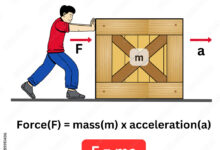
In physics, force is defined as any influence that causes an object to undergo a change in speed, direction, or shape. According to Newton’s Second Law, force equals mass times acceleration (F = ma). This equation is one of the most powerful tools in classical mechanics.
- Force is a vector quantity, meaning it has both magnitude and direction.
- It is measured in newtons (N), named after Sir Isaac Newton.
- One newton is the force required to accelerate a 1-kilogram mass by 1 meter per second squared.
Understanding this basic definition opens the door to more complex applications across science and engineering. For a deeper dive into Newton’s laws, check out Encyclopedia Britannica’s explanation.
Types of Forces in Physics
Forces come in many forms, each playing a unique role in how objects interact. The most common types include gravitational, electromagnetic, strong nuclear, and weak nuclear forces. These are known as the four fundamental forces of nature.
- Gravitational force: The attraction between masses, like Earth pulling objects downward.
- Electromagnetic force: Governs interactions between charged particles, responsible for light and electricity.
- Strong nuclear force: Holds atomic nuclei together despite proton repulsion.
- Weak nuclear force: Involved in radioactive decay and nuclear fusion.
“Force is not just a push or pull—it’s the essence of interaction in the universe.” — Dr. Michio Kaku
Newton’s Laws of Motion and Force
Sir Isaac Newton’s three laws of motion form the backbone of classical mechanics and are essential for understanding how force affects motion. These laws, formulated in the 17th century, remain foundational in physics education and engineering.
First Law: Inertia and Motion
Newton’s First Law, also known as the Law of Inertia, states that an object at rest stays at rest, and an object in motion stays in motion unless acted upon by an external force. This principle explains why seatbelts are crucial—they counteract inertia during sudden stops.
- Inertia depends on mass: the greater the mass, the greater the inertia.
- This law applies in space, where objects move indefinitely without friction.
- It’s why astronauts float—they’re in continuous free fall, not because there’s no gravity.
For a visual explanation, NASA’s educational resources on inertia and motion are excellent.
Second Law: Force, Mass, and Acceleration
The Second Law quantifies force: F = ma. This means the acceleration of an object is directly proportional to the net force acting on it and inversely proportional to its mass. It’s the reason a small car accelerates faster than a truck with the same engine power.
- If force increases, acceleration increases (if mass is constant).
- If mass increases, acceleration decreases (if force is constant).
- This law is used in designing vehicles, roller coasters, and spacecraft.
Engineers use this principle daily. For example, in automotive safety testing, crash simulations rely on precise calculations of force and deceleration.
Third Law: Action and Reaction
Newton’s Third Law states that for every action, there is an equal and opposite reaction. When you jump, you push down on the ground, and the ground pushes you up. Rockets work on this principle—expelling gas downward to move upward.
- This law explains propulsion in space, where there’s no air to push against.
- It’s why recoil happens when firing a gun.
- Swimming, walking, and even breathing involve action-reaction pairs.
“You can’t touch without being touched in return—Newton’s Third Law applies to life too.” — Carl Sagan
Force in Everyday Life
Force isn’t confined to textbooks—it’s everywhere. From walking to driving, force shapes our daily experiences. Recognizing these forces helps us understand the world and improve safety, efficiency, and design.
Friction: The Force That Slows You Down
Friction is the resistive force that opposes motion between surfaces in contact. It’s essential for walking, driving, and even holding a pen. Without friction, we’d slip on every surface.
- Static friction prevents objects from moving when force is applied.
- Kinetic friction acts on moving objects, slowing them down.
- Engineers reduce friction in machines with lubricants and increase it in tires for better grip.
Learn more about friction’s role in transportation at Science Buddies.
Gravity: The Force That Keeps Us Grounded
Gravity is the most familiar force—we feel it every second. It pulls objects toward each other, with Earth’s gravity keeping us on the surface. It also governs planetary orbits and galaxy formation.
- Earth’s gravitational acceleration is approximately 9.8 m/s².
- Gravity is weaker on the Moon, allowing astronauts to jump higher.
- Black holes have such strong gravity that not even light can escape.
Gravity isn’t just a planetary force—it’s a cosmic architect. The NASA Earth Observatory explores how gravity varies across Earth due to mass distribution.
Force in Engineering and Technology
Engineers apply the principles of force to design everything from bridges to robots. Understanding stress, strain, and load distribution ensures structures are safe and functional.
Structural Engineering and Load Forces
Buildings and bridges must withstand various forces: dead loads (their own weight), live loads (people, furniture), wind, and seismic forces. Engineers calculate these to prevent collapse.
- Tension and compression are key forces in trusses and beams.
- Skyscrapers use dampers to counteract wind-induced sway.
- The Golden Gate Bridge was designed to flex under force, not resist it rigidly.
For real-world examples, the National Society of Professional Engineers details how force analysis protects lives.
Robotics and Applied Force
In robotics, precise control of force is critical. Robots in manufacturing apply exact pressure when assembling electronics or welding car parts. Too much force damages components; too little fails to secure them.
- Force sensors allow robots to adapt grip strength.
- Surgical robots use micro-force control for delicate operations.
- Exoskeletons use force amplification to assist human movement.
“The future of robotics isn’t just movement—it’s intelligent force application.” — Rodney Brooks
Force in Nature and the Universe
From tectonic shifts to stellar explosions, force governs natural phenomena on every scale. Understanding these forces helps predict earthquakes, model climate, and explore space.
Tectonic Forces and Earthquakes
The Earth’s crust is divided into plates that move due to convection currents in the mantle. The forces at plate boundaries cause earthquakes, volcanoes, and mountain formation.
- Compressional forces create mountains like the Himalayas.
- Tensional forces cause rift valleys, like the East African Rift.
- Shear forces lead to transform faults, such as the San Andreas Fault.
The U.S. Geological Survey monitors these forces to improve earthquake preparedness.
Stellar Forces and Cosmic Events
In stars, gravity pulls matter inward while nuclear fusion creates outward pressure. This balance sustains stars for millions of years. When fusion stops, gravity wins, leading to supernovae or black holes.
- Supernovae release immense force, scattering elements across space.
- Neutron stars form under extreme gravitational force.
- Galactic collisions involve forces on a scale beyond human comprehension.
Astronomers use force models to simulate galaxy evolution. Explore more at NASA’s Astrophysics Division.
Force in Human Behavior and Society
Force isn’t just physical—it’s social, psychological, and political. Coercion, influence, and motivation are all forms of force that shape human actions.
Power and Coercive Force
Political and military force has shaped history. From ancient empires to modern conflicts, the use of force determines control and order.
- Just war theory debates when force is morally permissible.
- Police use force to maintain public safety, but accountability is crucial.
- Non-state actors sometimes use force to achieve ideological goals.
The Human Rights Watch documents the misuse of force globally, advocating for justice.
Psychological and Social Force
Peer pressure, cultural norms, and authority exert invisible forces on behavior. These social forces can drive conformity, innovation, or resistance.
- Stanford’s famous prison experiment revealed how role-based force alters behavior.
- Advertising uses psychological force to influence consumer choices.
- Social movements harness collective force to demand change.
“The strongest force in the world is the human will.” — Victor Hugo
Measuring and Calculating Force
Accurate measurement of force is essential in science and industry. Tools like spring scales, load cells, and accelerometers help quantify force in various contexts.
Instruments for Measuring Force
Different tools are used depending on the application and precision needed.
- Spring scales: Use Hooke’s Law (F = kx) to measure force based on spring extension.
- Load cells: Convert force into electrical signals, used in industrial scales and testing machines.
- Accelerometers: Measure acceleration, allowing force calculation when mass is known.
For calibration standards, the National Institute of Standards and Technology provides guidelines ensuring accuracy across industries.
Mathematical Models and Simulations
Complex systems often require computer models to predict force interactions. Finite element analysis (FEA) simulates stress and strain in materials under load.
- FEA is used in aerospace to test wing durability.
- Crash simulations predict injury risk based on force distribution.
- Weather models use force equations to predict wind and pressure systems.
Software like ANSYS and COMSOL enables engineers to visualize force dynamics before physical prototypes are built.
What is the unit of force?
The standard unit of force is the newton (N), defined as the force needed to accelerate a 1-kilogram mass at 1 meter per second squared.
How does force affect motion?
Force changes an object’s motion by altering its speed, direction, or shape. According to Newton’s Second Law, the greater the force, the greater the acceleration, assuming mass remains constant.
Can force exist without contact?
Yes, non-contact forces like gravity, magnetism, and electrostatic forces act over distances without physical touch. These are fundamental to planetary motion and atomic structure.
What are the four fundamental forces?
The four fundamental forces are gravitational, electromagnetic, strong nuclear, and weak nuclear forces. They govern all interactions in the universe, from subatomic particles to galaxies.
Is force a scalar or vector quantity?
Force is a vector quantity, meaning it has both magnitude and direction. This is crucial for accurately predicting motion and equilibrium in physics problems.
Force is far more than a physics formula—it’s a universal principle shaping everything from atoms to empires. Whether it’s the gravitational pull holding planets in orbit or the social pressure influencing decisions, force is the invisible hand guiding change. By understanding its forms, laws, and applications, we gain deeper insight into nature, technology, and human behavior. From Newton’s insights to modern engineering, the study of force remains a cornerstone of knowledge. As we continue to explore space, build smarter machines, and understand society, the concept of force will remain essential. Embrace it, measure it, and use it wisely—it’s the power behind every push, pull, and transformation in the universe.
Further Reading:
